With a little (ok, a lot) of help from some friends, and a fun “pie day”, I think I’ve conquered my fear of making pie crust. It was more a fear of the unknown, and those types of fears are usually bigger in your head than reality…and happily that turned out to be the case for pie crust. I’m not a huge pie-for-dessert person anyway, so learning to make pie hasn’t ever been too high on my “bucket list.” Pie day also means lots of pie recipes to share with you over the next few weeks, which is perfect since Thanksgiving is just around the corner!
There were many variations of pie crust recipes, mostly varying by the type of fat used (Crisco, vegetable oil, or butter). I decided to put myself on Team Butter and turned to a recipe from the trusty Everyday Food magazine.
Here are a few tips from my experience:
- Make the dough first since it needs to be refrigerated for an hour (we didn’t do this)
- I used a pastry blender instead of a food processor and that worked just fine.
- I did need the full 1/2 cup of water for the dough.
- You can prep the apples while the pie dough is being refrigerated. They will not turn brown once you mix in the lemon juice, flour, sugar, and spices (they will also taste delicious like that).
- Make sure you put enough flour on the wax paper before you roll out the dough.
- Baking it on a cookie sheets is important, our pie runneth over.
- We put aluminum foil along the edges of the crust just before we turned the oven down from 450 degrees to 375 degrees.
- Apple pie takes a long time to cook, and cool!
- For the flakiest, most tender crust it is essential that you keep all of your ingredients and equipment cold as you work. Make sure that your butter stays in the fridge until you are ready to use it. Keep your water ice cold. Chill your flour if your kitchen is particularly warm, and if necessary, place everything in the freezer in between steps to chill them down.
- Use all butter in the crust. Shortening and lard are flavorless.
- Choose tart apples! The tarter the apple, the more pectin it contains, preventing the apple from breaking down and oxidizing. The apple slices will retain their shape and structure. Good choices are: Granny Smith, Royal Gala, Empire, Cortland, and Golden Delicious.
- Par-cook your apples. They will hold their shape better and will get rid of the air pocket that can occur between the top of the apples and the crust than when you add your apples raw.
- Let the pie cool. Fight the urge to cut into that hot, out of the oven pie and serve at room temperature. It will be perfectly glazed and juicy and the crust will have a flakier, crispier texture.
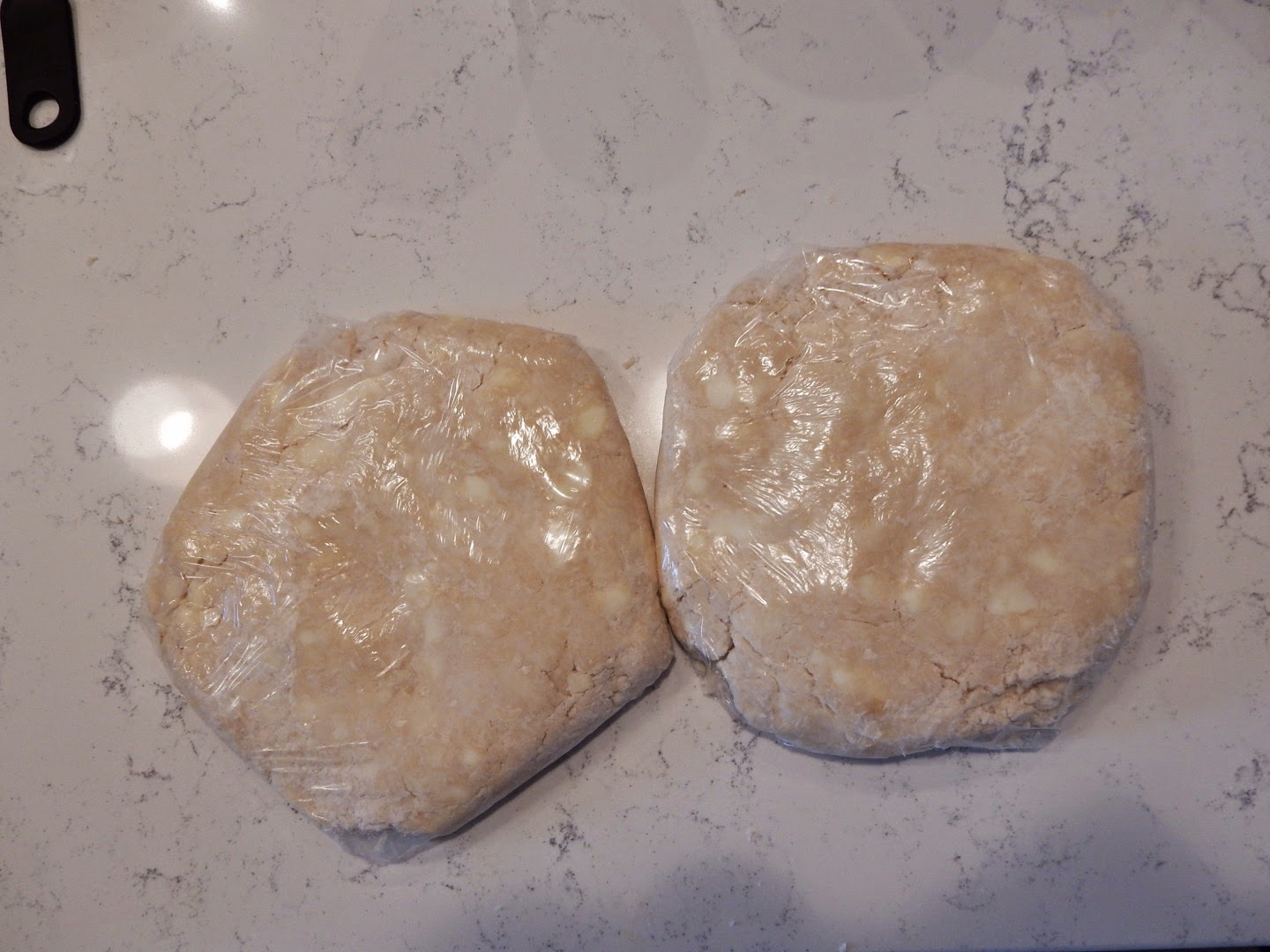 |
| Ready to go in the fridge |
Basic pie dough
Makes 2 crusts
Source: Everyday Food, November 2006
Ingredients
2 1/2 cups all-purpose flour (spooned and leveled)
1 teaspoon salt
1 teaspoon sugar
2 sticks (16 Tablespoons) cold unsalted butter, cut into pieces
1/4 to 1/2 cup ice water
Directions
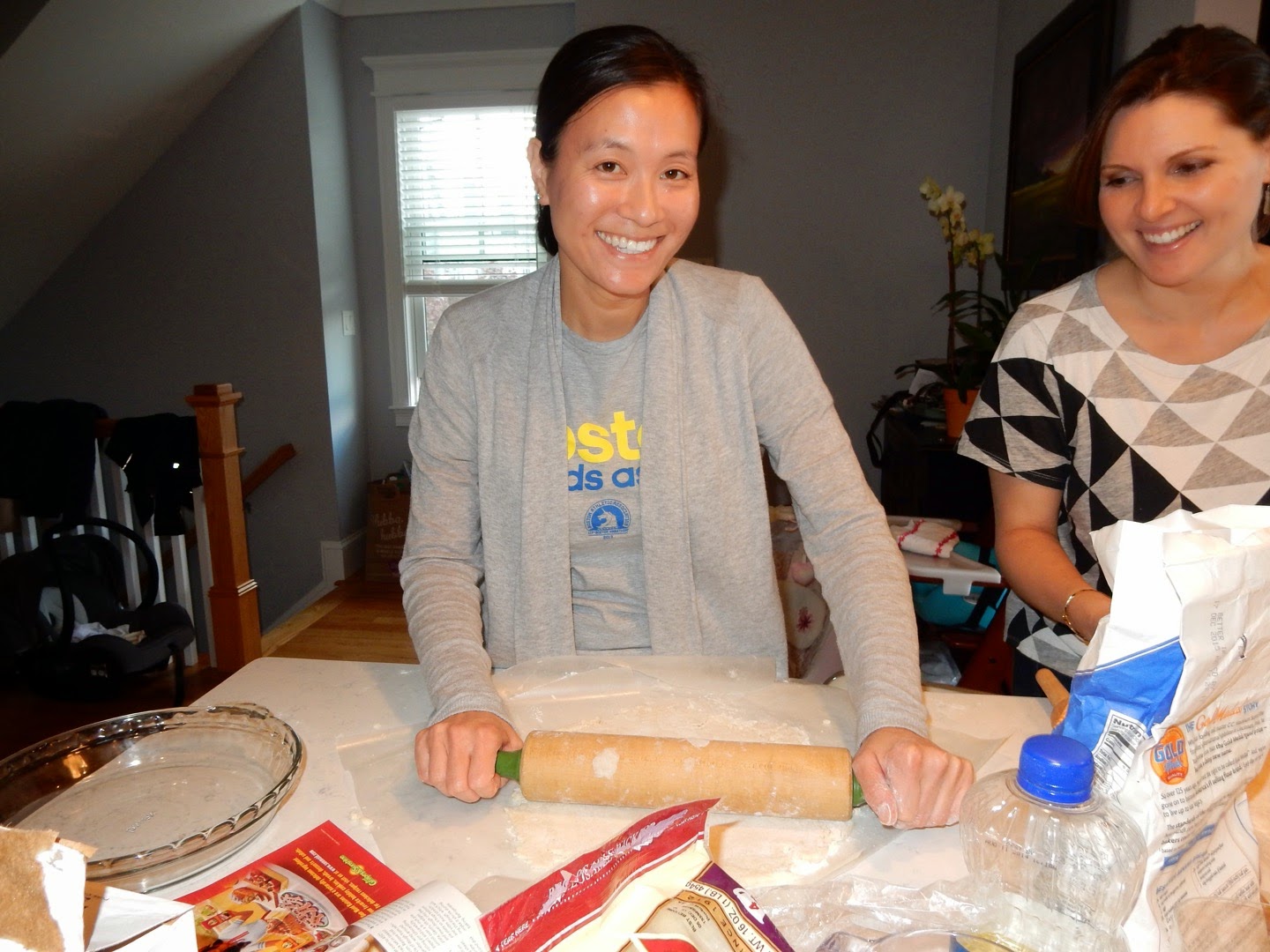 |
| Rolling out the dough |
1. In a food processor, combine flour, salt, and sugar; pulse to combine. Add butter; pulse until mixture resembles coarse meal, with just a few pea-size pieces of butter remaining.
2. Sprinkle with 1/4 cup ice water. Pulse until dough is crumbly but holds together when squeezed with fingers (if necessary, add up to 1/4 cup more water, 1 Tablespoon at a time). To help ensure a flaky crust, do not overprocess.
3. Transfer half of dough (still crumbly) onto a piece of plastic wrap. Form dough into a disk 3/4-inch thick; wrap tightly in plastic. Refrigerate until firm, at least 1 hours (and up to 3 days). Repeat with remaining dough. Disks can be frozen, tightly wrapped, up to 3 months. Thaw before using.
Apple pie
Serves: 8
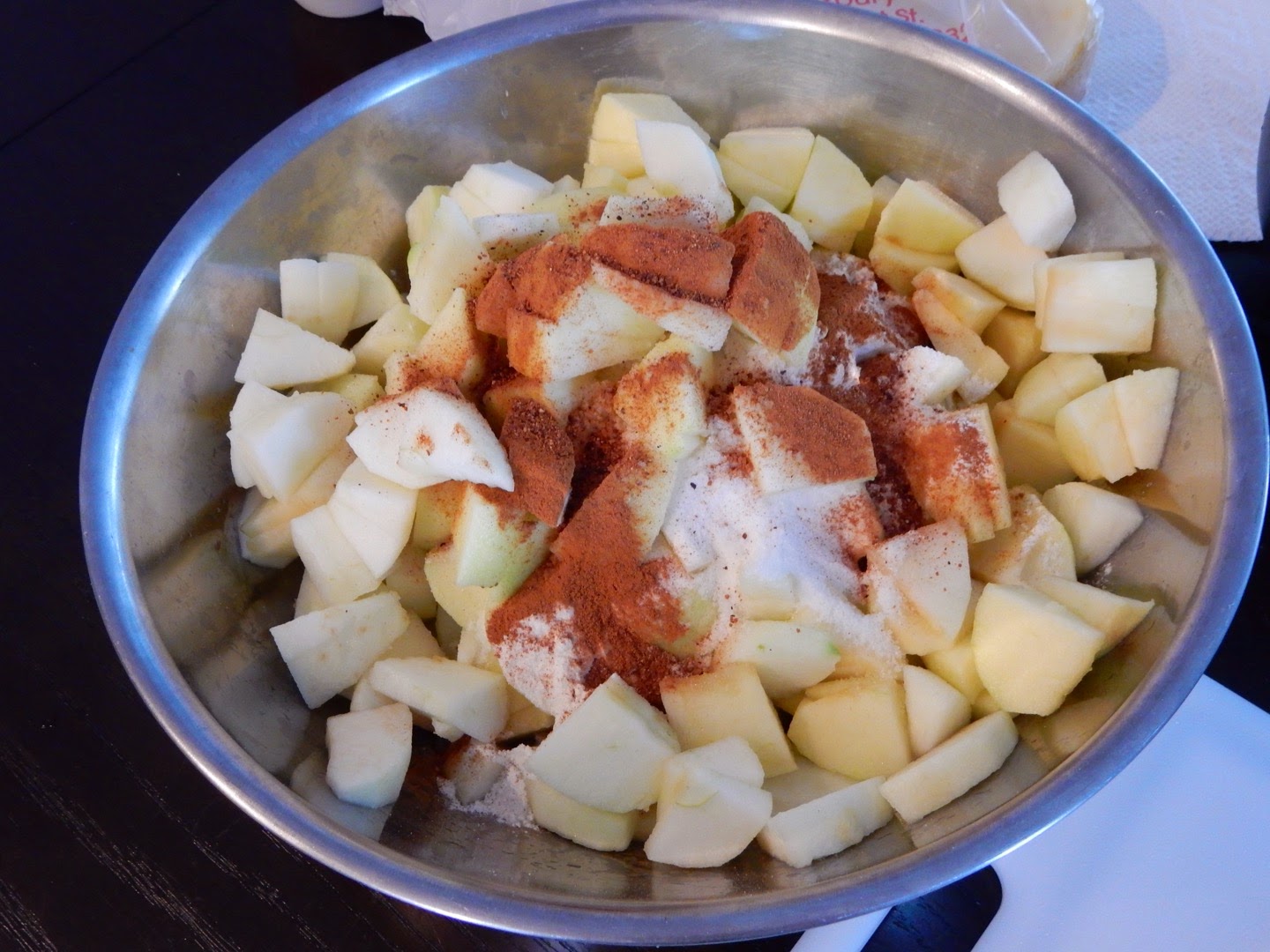 |
| This was 9 apples |
Source: Everyday Food, November 2006
Ingredients
1/4 cup all-purpose flour (spooned and leveled)
1 recipe (2 disks) basic pie dough
2 Tablespoons fresh lemon juice (from 1 lemon)
4 pounds apples (8-10)
3/4 cup sugar
1 teaspoon ground cinnamon
1/2 teaspoon nutmeg
1/2 teaspoon salt
2 Tablespoons unsalted butter, cut into small pieces
1 egg, beaten
Sugar to sprinkle on top of pie (optional)
Directions
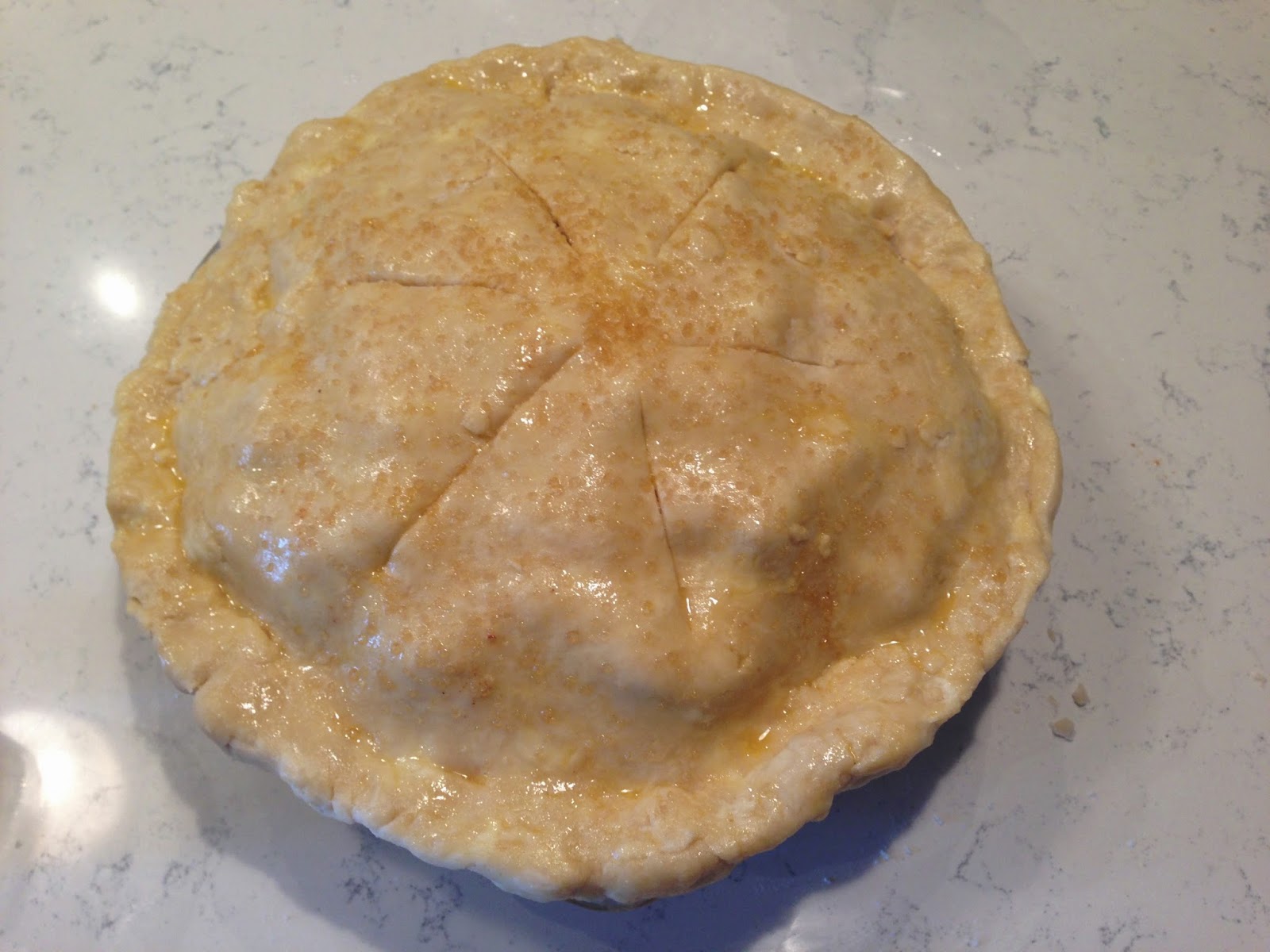 |
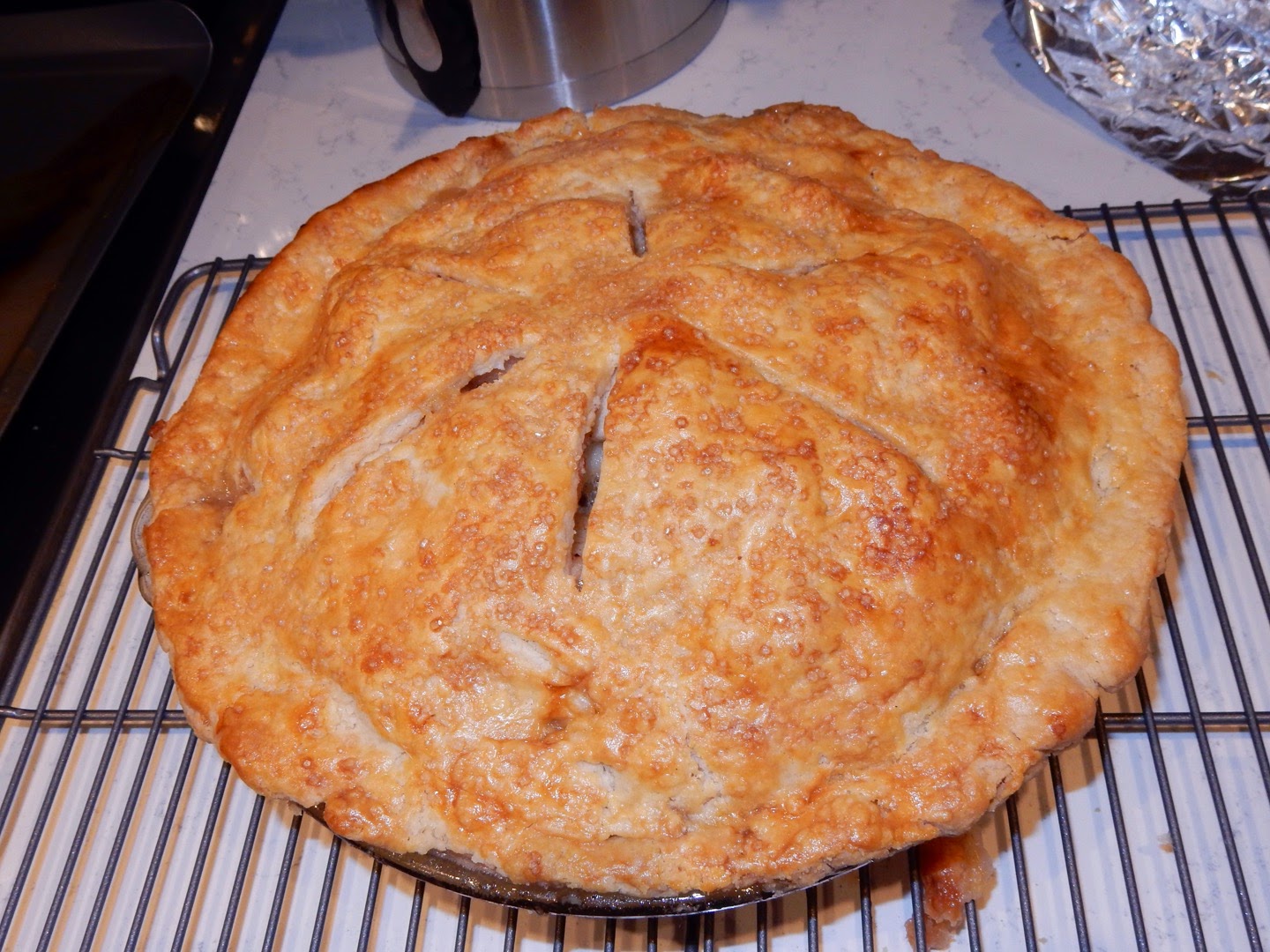
| Ready to go in the oven, need to work on crimping skills |
1. Lightly flour a large piece of waxed paper; place a disk of dough in center. Rolling from center outward, form into a 12-inch circle. (Use paper to rotate dough, and flour rolling pin and paper as necessary to prevent sticking). Transfer dough (still on paper) to a baking sheet; cover and refrigerate. Repeat with second disk of dough.
 |
| Voila! |
2. Preheat oven to 450 degrees F, with a rack set in lowest position. Remove first circle of dough from refrigerator; wrap around rolling pin (discarding paper), and carefully unroll over a 9-inch pie plate. Gently lift edges and lower dough into the pie plate so it hugs bottom and sides. Avoid stretching the dough, which will make it shrink during baking. Refrigerate.
3. Place lemon juice in a large bowl. Peel, core, and cut apples into 1/4-inch thick slices; halve crosswise, and add to lemon juice (to keep them from turning brown) as you work. Add sugar, flour, cinnamon, nutmeg, and salt; toss to combine.
 |
| Delish! |
4. Remove dough-lined pie plate from refrigerator. Fill with apple mixture, gently packing apples and mounding slightly in center; dot with butter. Lightly brush rim of pie shell with water. Remove remaining circle of dough from the refrigerator. Lay over apples; press along moistened rim to seal. Using kitchen shears, trim overhang to 1 inch.
5. With floured fingers, fold overhang under itself to form a thick rim; pinch between thumb and forefinger to form a uniform edge around the rim of the pie plate. To crimp edges: with thumb and index finger of one hand, gently press dough against knuckle of other hand; continue around the pie.
6. With a floured paring knife, cut 5-6 slits in top of pie, radiating from center. Brush top of crust with egg wash and sprinkle with sugar; place pie plate on a rimmed baking sheet. Bake 20 minutes; reduce heat to 375 degrees F and bake until crust is golden and juices are bubbling, 50-60 minutes more. If edges brown too quickly, cover with aluminum foild. Cool completely, at last 6 hours, before serving.

 Kara Cooks and Eats